
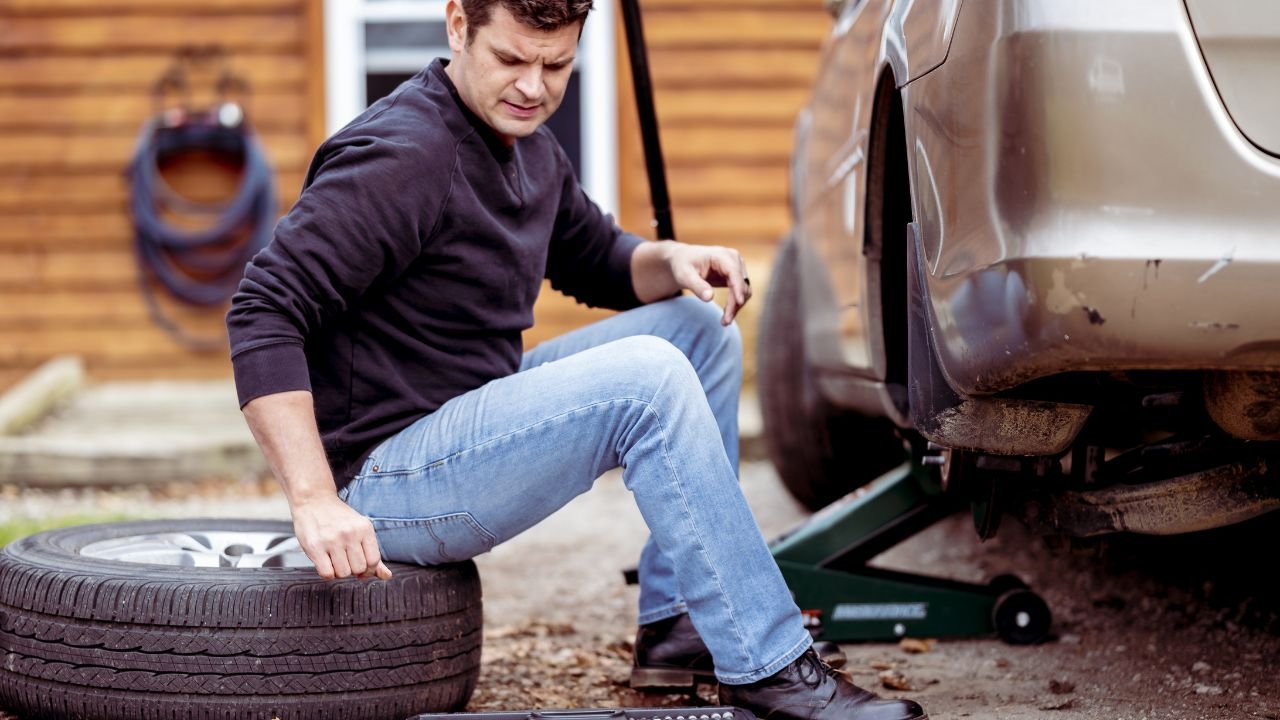
How to Change a Flat Tyre Safely (Tools, Steps & Mistakes to Avoid): In today’s times, when everyone is striving to become self-reliant, it’s crucial to have knowledge of basic vehicle care. If you’re one of those who wants to take care of your own vehicle, changing a tire is one of the first and most important things you should learn. It’s not just a matter of convenience, but also a crucial life skill.
Why is it Important to Know How to Change a Tire
Sometimes, situations arise when waiting for help is impossible. For example:
- If your car gets a puncture in a deserted area where there’s no service center available.
- If you’re in a dangerous or isolated location where waiting is unsafe.
- Or if you’re on a long trip and a sudden puncture ruins your entire plan.
In such situations, knowing how to change a tire yourself not only ensures your safety but also saves time and money.
Necessary Items for Changing a Tire
Changing a car tire isn’t a difficult science. With a few proper tools, anyone can do it. Always keep the following essential tools in your vehicle:
- Car Jack: This comes with the car and is usually kept in the trunk or near the spare wheel.
- Lug Wrench: This is used to loosen the tire nuts.
- Spare Tire: A spare tire in good condition and with the correct pressure.
- Owner’s Manual: Helpful for pointing to the correct locations and directions when changing a tire.
Additionally, here are some additional items you can keep with you:
- Flashlight (for use at night or in the dark)
- Wheel Wedges – to prevent the car from swaying
- Reflective Warning Signs – to alert other vehicles
- Safety Gloves – to protect your hands
- Air Can or Tire Inflator – to check the pressure
Stopping the Car Safely
As soon as you realize a flat tire, immediately reduce speed and turn on your hazard lights. Try to stop on a level and flat surface slightly off the road.
If you are on a highway or hilly terrain, slowly stop where there is less traffic and firm ground. Once you have stopped, turn off the engine and apply the handbrake to prevent the vehicle from skidding.
Step-by-Step Tire Replacement Process
- Prepare all tools: Remove the jack, wrench, and spare tire from the trunk.
- Identify the jack position: There are small marks or metal dimples under the car where it’s safe to place the jack.
- Place the jack in the correct position: Rest the jack base on the ground and ensure the ground is not soft.
- Remove the hubcap and loosen the lug nuts: First, remove the hubcap and loosen the lug nuts slightly to make further removal easier.
- Raise the car: Now, using the jack, raise the car slightly so the tire is off the ground.
- Remove the lug nuts: Remove the nuts by turning the wrench counterclockwise.
- Remove the tire: Hold the tire with both hands and slowly pull it outward.
- Install the spare tire: Place the new tire snugly on the lug bolts and press it in.
- Install the nuts: Reinstall the nuts and tighten them gently.
- Lower the car: Slowly lower the jack so the car is level with the ground.
- Tighten the nuts: Now tighten all the nuts firmly with a wrench.
- Install the hubcap: Complete the process by reinstalling the hubcap.
Now put all the tools back in place and place the punctured tire in the trunk. Your car is now ready to go again.
Things to consider when changing a tire
- Hold the nuts: Place them on the ground so they don’t get lost. If desired, store them in the hubcap.
- Install wheel wedges: If the surface is sloping, place bricks or stones behind or in front of the car to prevent the car from rolling.
- Place the flat tire to the side: so it doesn’t roll and can be used for safety under a jack if needed.
- Don’t spin the tire: After installing the new tire, don’t spin it until the nuts are tightened.
- How to tighten the nuts: When the vehicle is lowered, press down on the wrench with your body weight, but don’t jump on it.
- Check tire pressure: If you have a tire pressure monitor, be sure to check the pressure of the new tire.
- Know the spare tire’s limits: Don’t drive at high speeds with a smaller size tire (donut tire) and get the main tire repaired as soon as possible.
Conclusion
Changing a car tire is a skill every driver should master. It not only increases your self-reliance but also ensures your and others’ safety in case of emergencies. With a little practice and caution, you can master this process. Remember – a prepared driver is a safe driver.
